


- عربي
-
- share
-
subscribe to our mailing listBy subscribing to our mailing list you will be kept in the know of all our projects, activities and resourcesThank you for subscribing to our mailing list.
Double Standards of Lebanon’s Cement Producers: Between Resource Extraction and Landscape Conservation
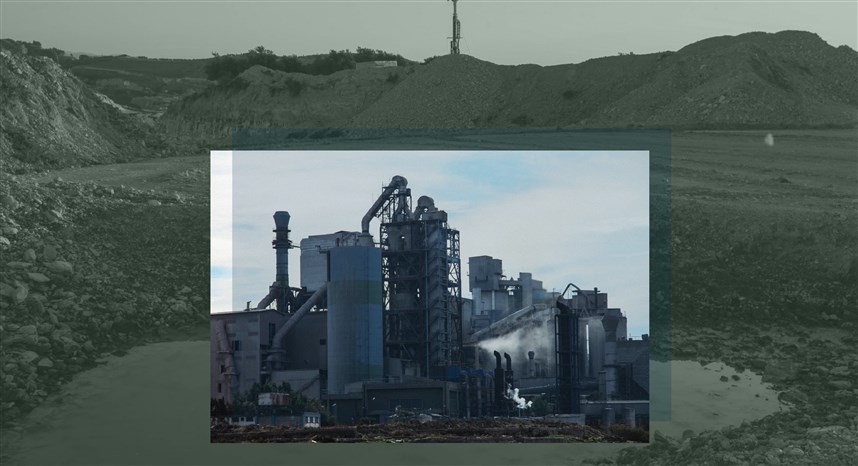
Three companies dominate cement production in Lebanon: Cimenterie Nationale (Al-Sabeh Cement), Holcim, and Sibline. These companies have monopolized the domestic market for decades, owing to the tight restrictions Lebanon has imposed on cement imports, while enjoying the ability to export cement to neighboring countries without any ceilings or constraints. These conditions have allowed the three companies to reap huge profits, further reinforced by two additional factors: (1) increased demand for raw materials during the reconstruction phase following Lebanon’s Civil War (1975-1990) and the real estate boom that followed; and (2) the prevailing lawlessness in the quarrying sector. This sector expanded and extended after the war outside its regulatory framework to sites close to cement factories, under the pretext of a lack of adequate means of transport that would otherwise allow cement companies to operate without incurring additional costs.1
As a result, quarries and crushers are now spread across environmentally sensitive sites and inhabited areas, in violation of the National Master Plan for Quarries and Stone Crushing Sites (Decree No. 2002/8803), as well as sites added to it subsequently (Decree No. 1735/2009), and contrary to the recommendations of the National Physical Master Plan of the Lebanese Territory (NPMPLT) (Decree 2366/2009). Regardless of the discrepancies between these decrees concerning zones deemed suitable for quarries, unregulated investment in the sector has led to severe environmental damage and significant public losses. Adding to those losses, authorities have failed to rehabilitate exploited sites and to collect the fees and fines owed by operators of non-compliant quarries, including cement companies.2
Paradoxically, despite their legal violations and the high environmental and health costs of their activities, decision-makers in the three companies have emerged as environmental stewards keen to protect the natural landscape and advance sustainable development goals. This article offers a critical overview of their environmental double standards, revealing that their engagement in conservation efforts and the rehabilitation of degraded sites is not driven by genuine environmental commitment, but primarily by political and economic considerations. Accordingly, the article warns against “greenwashing" tactics often used by polluting companies to camouflage their negative impacts and evade institutional and social accountability. Such tactics are particularly salient in the context of climate change, amid increased emphasis by governments and donor on compliance with standards aimed at reducing carbon emissions and directing capital towards sustainable activities.
The diverse and varied activities of key actors in cement companies
The divergence in the activities of the three cement companies and some of their key figures highlights how major industrialists can assume overlapping roles, including forming associations to protect and manage Lebanon’s natural landscape. Pierre Joseph Doumet, for example, occupies a dual position that clearly reflects this overlap: he is the chairman and CEO of Cimenterie Nationale, founded in 1953 by the Doumet and Assili families. At the same time, he is the president and co-founder of the Association for the Protection of Jabal Moussa (APJM). The association was established in 2007 to preserve the natural wealth and biodiversity of Jabal Moussa and create nature reserves there. According to the ICIJ Offshore Leaks database, Pierre Doumet is also a shareholder and chairman of Charnwood Limited, which was founded in 1989 in the British Virgin Islands. While no information is available on this company’s activities, it is clear that it is a family business. The only shareholder from outside the family, acting as a trustee of its management, is Crédit Agricole Management Services (Bahamas) Limited, which is part of the international banking group Crédit Agricole.
This overlap in activities is not limited to Doumet. It also includes MP Nabil de Freije, who is one of the founders of APJM as well as a shareholder and board member of Liban Lait and several financial, real estate, and commercial companies. The same applies to Walid Jumblatt, who, alongside his political role, serves as chairman of the board of directors of the Sibline cement company (Ciment de Sibline), founded in 1974 under the leadership of his father. Jumblatt is also president of Al-Shouf Cedar Society, which was formed in 1994 to oversee the establishment and management of Al-Shouf Cedar Nature Reserve. The Society also includes other Lebanese political figures, among them Noura Jumblatt, Akram Chehayeb, and Michel Skaff, director of the Skaff family's agricultural properties, which include the Ammiq Reserve in the Zahle district.
Holcim, founded in 1929 as "La société des Ciments Libanais," has a different administrative structure from Cimenterie Nationale and Sibline, since it is affiliated with the global Holcim Group. Notably, the Swiss company Holderbank (which became Holcim in 2001) acquired a majority stake in the Lebanese company after its establishment and changed its name to Holcim (Liban) in 2002. In October 2025, Holcim (Liban) announced that Holcibel, its main shareholder from the Holcim Group, had entered into a conditional agreement to sell its entire stake to B.Z.L. Cement Holding, owned by Mohammad Zeidan and his family, and North Pine Holding, owned by Gilbert Sassine. While none of the current or future shareholders are associated with major environmental initiatives, the Holcim Group itself is associated with the Holcim Foundation Awards for Sustainable Construction. The group established this non-profit foundation in 2003 to signal its commitment to a green built environment and to accelerating the transition toward a smart, circular, inclusive, and low-carbon future. The foundation launched prestigious competitive awards a year later and has since awarded them to more than 340 projects worldwide for balancing environmental performance, social responsibility, and economic growth.
Greenwashing in the environmental discourse of the three companies
The contradiction between the objectives of the Holcim Foundation Awards and the group's continued involvement in cement industry has prompted some architects to call for a boycott of these awards. Critics describe Holcim’s environmental discourse as a glaring example of greenwashing, since the cement industry accounts for approximately 5% of global anthropogenic carbon dioxide emissions (CO₂) contributing to global warming. They argue that the awards mask the environmentally and socially harmful activities of the parent company, including violations of labor and human rights. Reports by international organizations such as Greenpeace also highlight the contradiction between the sustainable building awards and the reality of pollution, health risks, and labor rights violations caused by Holcim Group, particularly since its merger with the French company Lafarge in 2015.
Accusations of greenwashing directed at Holcim Group are not limited to the environmental discourse surrounding its awards. They also extend to the group’s approach to rehabilitating the natural sites it has degraded—an approach that Holcim presents as a core pillar of its environmental strategy. In Lebanon, Holcim claims it is committed to the standards set by the global group for quarry rehabilitation and biodiversity management, including reintegrating depleted quarries into the natural landscape, restoring land to uses deemed beneficial and acceptable by concerned people, and minimizing long-term environmental, social, and economic impacts. However, the inconsistency between this discourse and the company's documented environmental violations leaves little doubt that its rhetoric on mitigating the damage caused by the cement industry is merely an extension of its greenwashing practices.
The same applies to Cimenterie Nationale and Sibline, whose environmental discourse similarly adopts a green veneer, diverting attention from the violations and environmental harms linked to their extractive and industrial practices. As with Holcim, their approach to environmental action remains limited to post hoc compensation rather than addressing harm at its root, using terms such as “sustainability,” “rehabilitation,” and “compliance with international standards” as a framework to justify the continued expansion of their activities.
For example, Cimenterie Nationale’s website presents a summary of its environmental program, launched in 1995 to rehabilitate quarries. It also outlines a future action plan aimed at mitigating the impacts of its industrial activities and fostering partnerships between Lebanese industry and local communities. This overview includes the Green Belt Project surrounding the company's quarries in the town of Badbhoun-Koura, completed in 2012. Notably, after purchasing roughly half of the town and converting it from fertile soil to raw materials for cement production, the company presented the Green Belt Project in celebration of its 60th anniversary as a model of environmental compensation and a step towards reassuring residents that future quarrying operations would not extend to neighboring villages. However, practical assessments of the company's practices raise doubts about the effectiveness of its environmental and social commitments and the extent to which its completed projects can restore landscapes and biodiversity.
Greenwashing rhetoric and practices have accelerated globally over the past two decades. They come alongside calls from various international actors, including the United Nations, the World Bank, and other international financial institutions, to integrate environmental, social, and governance (ESG) factors into corporate and institutional decision-making. This push aims to enhance sustainability within financial markets and strengthen the principles of responsible investment amid climate change. However, many companies and institutions have exploited this trend to improve their image, especially since the data provided in their sustainability disclosures is often unaudited and therefore unreliable.3 This pattern applies to the three cement companies in Lebanon as well, which have adopted the global environmental discourse to beautify their practices without fundamentally addressing the environmental and social harms they cause.
Protecting, privatizing, and commodifying the natural landscape
The nature conservation practices associated with the main actors in Cimenterie Nationale and Sibline are no less controversial than the quarry rehabilitation initiatives of the three cement companies. As the cases of Jabal Moussa and Al-Shouf Cedars show, conservation initiatives can become problematic in themselves when they intersect with economic interests and networks of influence, leading to the privatization and commodification of the natural landscape.
In particular, Jabal Moussa Nature Reserve (Keserwan district) stands in stark contrast to the polluting industrial activity of Cimenterie Nationale, which has turned the Chekka coast and large parts of the Koura district into devastated areas. The reserve was established thanks to the efforts of APJM, headed by Pierre Doumet. They succeeded in creating a national reserve (protected forest) on this mountain on communal lands belonging to the Ghbaleh municipality (Nahr Al-Dahab cadastral area), by a decision issued by the Minister of Agriculture in 2008. Subsequently, the association signed a 10-year lease with the religious institutions (the Maronite Patriarchate and several church endowments) that own large areas of the mountain and succeeded in convincing the Lebanese government of the importance of protecting the site in accordance with international agreements.4 As a result, the natural site of Jabal Moussa and the surrounding villages became part of UNESCO's Biosphere Reserve Network in 2009. The association then sought to expand the protected area and, in 2012, succeeded in designating several properties in Nahr Al-Dahab as a natural site under the protection of the Ministry of Environment. The classification decree was followed by a 2015 decision by the Minister of Environment prohibiting hunting in the protected site and in some common lands and private properties located in its vicinity.
Ultimately, the implementation of environmental protection measures in Jabal Moussa has led to the enclosure of large areas of land and tangible changes in land use patterns. This has sparked local opposition, particularly from traditional herders, due to restrictions on their access to the protected area.5 Nevertheless, Jabal Moussa Biosphere Reserve is considered a successful model of conservation in Lebanon and a well-known eco-tourism destination locally and regionally. It spans a vast area (approximately 6,500 hectares), encompasses both public and private properties, and is subject to environmental management that is described as "innovative" in terms of integrating the local community into income-generating activities. This success prompted APJM in 2018 to negotiate a 50-year renewable lease with the religious institutions that own parts of the reserve.6
Like Jabal Moussa Biosphere Reserve, the Shouf Biosphere Reserve stands in stark contrast to the polluting industrial activities of the Sibline cement company, which have transformed the town of Sibline and its beach into degraded areas. This reserve was established in 1996 through the initiative of Al-Shouf Cedar Society, headed by Walid Jumblatt, and was incorporated into UNESCO's Biosphere Reserve Network in 2005. In addition to its core zone, it comprises today a buffer zone and an extensive transitional zone spanning a number of villages and towns. The Shouf Biosphere Reserve is considered the most successful reserve in Lebanon and holds a distinguished position on the Green List of Natural Reserves in the Arab world, maintained by the International Union for Conservation of Nature (IUCN). This global recognition attests to the effective governance and sustainable management of protected areas. As with Jabal Moussa, the reserve includes public and private properties, and its programs combine environmental protection with local tourism activities aimed at creating job opportunities and income sources for the inhabitants of the surrounding villages. However, this success has been accompanied by the privatization and commodification of nature, including water resources, with Aquafina, a subsidiary of the American company PepsiCo, enjoying a concession to bottle and sell drinking water from the reserve’s transitional zone.
From this perspective, the Shouf and Jabal Moussa reserves raise legitimate questions about the transformation of nature from an essential element for human survival to an economic resource subject to market logic and competition. This transformation is not limited to reframing the natural landscape, biodiversity, and cultural heritage within tourist packages and marketable local products. It also entails increasing dependence on external financing mechanisms, which reproduces new relations of domination in the name of the environment and nature, job creation, and sustainable protection.
Resisting greenwashing and effectively protecting the environment and nature
Despite differing local contexts, the environmental initiatives of the three cement companies have failed to appease the anger of the affected communities or restore a minimum level of public trust. Similarly, nature reserves have failed to polish the image of company owners leading conservation initiatives in the eyes of residents directly impacted by their industrial activities. Pierre Doumet attributes local objections to conflicting social demands, stemming from the need of workers in the cement sector for employment and their desire, at the same time, for an unpolluted environment. He takes pride in his company’s ongoing efforts to make its operations as environmentally friendly as possible and in its commitment to "the highest national and international environmental standards."
However, a statement issued last year by the Kfarhazir Environmental Committee on National Nature Reserves Day refutes these claims and implicitly points to two fundamental issues: (1) the rejection of greenwashing and its tools, and (2) the refusal to allow certain areas—particularly the towns of Koura—to become victims of the cement companies’ greed in exchange for the enactment of environmental laws and regulations tailored to the interests of the company owners. This includes the establishment of nature reserves in areas under their influence and far from the areas exploited for the expansion of their industrial activities. The spatial separation between extraction sites and protected areas deepens the sense of double standards and reinforces the conviction among affected residents that the discourse of nature conservation is used as a tool to achieve political and economic gains, rather than reflecting a genuine commitment to protecting the environment and achieving justice in the distribution of harms and benefits.
Based on local demands, there is a clear need for an approach to environmental and nature protection that goes beyond the logic of isolated projects and corporate responsibility alone. This approach is based on three fundamental pillars and on the participation of the private and public sectors and local communities in the decision-making process:
1. Integrated strategic regional planning
Redefining the allowable geographical locations of sites suitable for quarries and crushers within the sector’s legal and regulatory frameworks should be grounded in the recommendations of the National Physical Master Plan of the Lebanese Territory (NPMPLT). Adopting the recommendations of the NPMPLT is also crucial to preserving landscape continuity and linking different regions in ways that strengthen their physical connectivity, economic relations, and coordination mechanisms. This includes formulating equitable regional development policies to address the unequal distribution of environmental damage caused by extractive and polluting industries. It also entails the development of management strategies that redistribute the financial returns associated with environmental conservation, thereby limiting spatial separation and preventing the degradation of certain areas while others prosper.
2. Social and environmental safeguards
Environmental and social safeguards are inadequate and insufficiently enforced in Lebanon, exposing communities and ecosystems to the cumulative negative impacts of industrial activities, including cement production. At the same time, the absence of comprehensive protection policies has enabled the reconfiguration of landscapes in ways that serve the interests of powerful actors, to the detriment of social rights and environmental justice. Urgent policy interventions should establish clear and binding safeguards that reduce harm to the environment and public health, protect the rights of populations affected by industrial activities, and preserve natural heritage. This includes the development of effective tools to address the root causes of accumulated damage and to compensate for the structural losses inflicted on land, water, and quality of life.
3. Accountability and liability
Scrutinizing the environmental practices of industrial companies—along with those of their managers, founders, financiers, and major investors—can dismantle the logic of greenwashing and hold polluters accountable. This requires subjecting companies, relevant institutions, and prominent individuals associated with them to effective and independent mechanisms that prevent the use of environmental rhetoric to obscure their responsibility for environmental degradation and the high cost this imposes on local communities. Key measures include ensuring transparency in environmental impact assessments, linking environmental commitments to clear legal consequences under the "polluter pays" principle, and imposing deterrent penalties on those responsible for environmental harm.
These three pillars form the basis for environmental governance and the sustainable management of natural resources. Their effectiveness depends on establishing adequate frameworks for cooperation and coordination among relevant actors at both the national and local levels, as well as on ensuring transparency and independence from the influence of industrialists, politicians, and financiers. As such, they also serve as a starting point for developing more equitable public policies to protect the environment and preserve the landscape.
This article is part of TPI and The Legal Agenda’s joint project “Climate, Land and Rights”.
1. نزار صاغية ورين إبراهيم، المقالع تقضم الجبال: صناعة نظام اللاقانون، المفكّرة القانونيّة بالتعاون مع مبادرة سياسات الغد، كانون الأوّل 2025. https://legal-agenda.com/المقالع-تقضم-الجبال-صناعة-نظام-اللاقا/
2. Same as previous reference.
3. Ellen Pei-yi Yu, Bac Van Luu, & Catherine Huirong Chen, Greenwashing in environmental, social and governance disclosures. Research in International Business and Finance, 2020, Vol. 54, 101192. https://doi.org/10.1016/j.ribaf2020..101192
4. Pierre Doumet. Working with Religious Endowments to Set Up a PPA: Jabal Moussa, Lebanon. In Guidelines for Privately Protected Areas, Mitchell, B.A., Ed.; IUCN: Gland, Switzerland, 2018. https://portals.iucn.org/library/sites/library/files/documents/pag-029-en.pdf
5. Ibrahim Dhani, Using Virtual Reality as a Tool for Participatory Planning in Biosphere Reserves: The Case Study of Jabal Moussa, Lebanon, master’s degree thesis, American University of Beirut, 2023. https://scholarworks.aub.edu.lb/items/6baebb9e-bac3-4515-9e56-ac8092a12904
6. Pierre Doumet. Working with Religious Endowments to Set Up a PPA: Jabal Moussa, Lebanon. In Guidelines for Privately Protected Areas, Mitchell, B.A., Ed.; IUCN: Gland, Switzerland, 2018. https://portals.iucn.org/library/sites/library/files/documents/pag-029-en.pdf
From the same author
view all-
10.15.24eng
لا عدالة مناخية في خضمّ الحروب
منى خشن, سامي عطاالله -
06.08.22eng
تطويق الأراضي في أعقاب أزمات لبنان المتعددة
منى خشن
More periodicals
view all-
06.30.26
Coral Tanks Refresh the Memory of the Port Explosion: "Everyone knows" and everyone learned nothing
أماني البعينياليوم وعند حدود العاصمة بيروت، شارفت شركة كورال، على إنهاء تنفيذ أعمالها التوسّعية الرامية لإضافة 20 خزّانا جديدًا مخصّصا للمشتقات النفطيّة السائلة والمسيلة، في منطقة برج حمّود المكتظّة بالسكان والمؤسّسات التجارية والصناعية. وكان الإعلان عن بدء المشروع قد أثار موجةً من الاعتراضات الشعبيّة والرسميّة في المنطقة، على خلفيّة المخاوف من حصول انفجار مُشابه لانفجار مرفأ بيروت، الذي ما زال حيّا في ذاكرة السّكان هنالك. وانطلاقًا من خطورة هذا المشروع على أمن العاصمة وما يعكسُه من تخلّ عن المسؤوليّة وتمادٍ في تسفيه الخطر العامّ، أجرت المفكّرة هذا التحقيق الأوليّ الذي أردنا منه توثيق مسار الترخيص للمشروع والحجج القانونية التي تذرعت بها الإدارات المعنية لتمريره أو التنصّل من أيّ مسؤوليّة عنه والتّدقيق في مدى صحّتها. وقد أجرينا لهذه الغاية سلسلةً من المُقابلات مع جهاتٍ ومصادر إداريّة وقضائية، ومع أبرز الخبراء المعنيين والحقوقيين الناشطين والمطلعين على القضية.
اقرأ -
06.16.26
هكذا تعاملت السّلطة مع تعدّيات شاطئ البترون المستمرّة
أماني البعينييفتتح اليوم السيّـد رمزي يزبك منتجعه السياحيّ Oursin Batroun. ويعكس هذا الافتتاح بالحقيقة انتكاسةً في حراك النّـاشطين البيئيّـين، وسقوطاً جديداً للدّولة في امتحان استرداد الأملاك البحريّـة المنهوبة. ولئن بدأت التّـعدّيات، في هذا الموقع من شاطئ البترون أثناء الحرب الأهليّـة 1975-1990، ما كان لهذا المشروع أن يكتمل رغم الشّـكاوى، لولا الحرب الإسرائيليّـة الأخيرة وما نجم عنها من انشغالٍ للرّأي العامّ وإضعافٍ للإدارة.
اقرأ -
06.10.26
السلطة المنفصمة: لبنان لا يتعرّض للعدوان
سامي عطاالله, سامي زغيب, ليا غندورلم تباغت الحرب أحداً. مع ذلك، كان تعامل السلطة مع تداعياتها منفصماً عن الواقع. فلا إعلان لحالة طوارئ، ولا خلية أزمة، ولا مراسيم أو قوانين استثنائية تواكب معاناة الناس في الشوارع والطرقات.
اقرأ -
05.06.26
2024–2026: Israeli Bombardment of Tyre: Where and What?
تالا علاء الدين, جنى نخال, ريان علاء الديننستقي هذا النَّصَّ من بحث أوسع عملنا عليه عن المدينة منذ 2023، وثَّقنا خلاله نسق القَصْف على أحيائها، وأضفنا رصداً للقَصْف الإسرائيلي خلال حرب 2026، في محاولة لقراءة توزُّع هذا القَصْف جغرافياً وتأثيراته على المدينة وأهلها. من هنا، يمثِّل إدراكنا لحجم هذه الخسائر وتوثيق أبعادها المختلفة نقطة انطلاق أساسية نحو أرشفة جرائم الاحتلال من جهة، ورسم مسار لتعافي المدينة بعد الحرب من جهة أخرى.
اقرأ -
03.26.26
بيان مشترك: كيف نحمي لبنان؟
تراكمت وتشابكت أزمات الداخل والخارج، بما يضعف مؤسسات الدولة اللبنانية ويهدّد الوحدة الوطنية بشكل كبير. وأمام هذا التحدّي المريع، تداعينا كمنظمات حريصة على وحدة الوطن بما يمثله بحكم تاريخه وتكوينه، لإصدار هذا البيان الذي يعكس تطلعاتنا من الدولة ويدق ناقوس الخطر إزاء الانزلاق إلى الهاوية.
اقرأ -
02.24.26
الحرب المستمرّة: إنذارات إسرائيلية لـ 13 قرية منذ بداية العام ومئات الوحدات المتضرّرة
إيناس شرّيمنذ مطلع العام، وجّهت إسرائيل إنذارات لمبانٍ في 13 قرية في جنوب لبنان والبقاع، أعقبتها غارات ألحقت أضرارًا بمئات الوحدات السكنية والتجارية، وتسبّببت بخسارة عشرات العائلات منازلها، في ظل استجابة رسمية محدودة. أعنف الاستهدافات كانت في 21 كانون الثاني 2026، حين وجّه العدو الإسرائيلي إنذارات إلى كلّ من قنّاريت والكفور وجرجوع والخرايب وأنصار. في أنصار مثلًا، طالت الأضرار 100 وحدة سكنيّة بشكل جزئي، ودمّر منزلان بشكل كامل فضلًا عن تضرّر 90 محلًا ومؤسسة تجاريّة بشكل جزئي أو متوسط. في الكفور، أدّت الغارات إلى تضرّر 110 وحدة سكنيّة بشكل جزئي و9 وحدات بشكل كبير باتت معه غير قابلة للسكن و4 وحدات دمّرت كليًّا.
اقرأ -
02.23.26
زيادة بِيَد وضريبة باليَد الأخرى: الهندسة الطبقيّة لتمويل الأجور وشَرْعَنَة الجباية من لقمة العيش
خالد سعدما يجري اليوم لا يبدو إنصافًا بقدر ما يبدو مقايضةً قاسية: تُمنَح الزيادة على الورق، ثمّ تُستعاد عمليًّا عبر ضرائب تطال كلّ ما يشتريه الناس. وهكذا يُوضَع الموظَّف العامّ في مواجهة الفئات الأخرى المتضرّرة من الزيادات الضريبيّة، على الرغم من أنّه يخضع للعبء نفسه.” اقرأوا مقالنا الجديد عن سياسة الحكومة الضريبية لزيادة أجور القطاع العام. من كتابة الباحث في مبادرة سياسات الغد، خالد سعد.
اقرأ -
02.18.26
تهديد مستشفى صلاح غندور: كيف تحاول إسرائيل نزع الحماية عن المرافق الصحّية في الجنوب؟
حسين شعبانيُظهر هذا التحقيق أنّ المسألة لم تعد تتعلّق بقدرة مستشفى على الصمود، بل بحدود المقبول قانونيًا وسياسيًا. فإذا سُمح بأن ينزع الغطاء المدني عن مرفق صحي بالاتهام وحده، يصبح أي مستشفى قابلًا للتجريد من حمايته بالكلام. وبهذا، تثبّت إسرائيل أنّ العمل الطبي في الجنوب اللبناني تحت التهديد بات قاعدة، لا استثناء. تم تحرير هذا المقال في إطار مشروع "مرصد إعادة الإعمار" الذي تنفّذه المفكّرة القانونية بالتعاون مع مبادرة سياسات الغد، استديو أشغال عامة، ومختبر المدن – بيروت.
اقرأ -
12.19.25
المقالع تقضم الجبال: صناعة نظام اللاقانون
نزار صاغية, رين إبراهيمتضخّـم قطاع المقالع بعد عام 1990 بشكلٍ عشوائيّ، وتحوّل في معظمه إلى احتكارات تابعة لقوى نافذة تعمل خارج القانون. توثّـق هذه الورقة كيف تَشكّـل نظام اللاقانون في هذا القطاع، وما خلّفه من أضرار بيئيّة وماليّة واجتماعيّة، والدور الذي لعبته المواجهة القانونيّة–القضائيّة في إحداث أثر فعليّ على الأرض. ورقة بحثيّة من كتابة نزار صاغية ورين إبراهيم، ضمن مشروع “المناخ والأرض والحقّ” بالتعاون مع مبادرة سياسات الغد.
اقرأ -
11.21.25
وصفة لتبييض المسؤوليات في مجال الصرف الصحّي: الخلل في الصرف الصحي نظاميّ أيضًا
نزار صاغية, فادي إبراهيمتقدّم هذه الورقة خلاصةً دقيقة لتقرير ديوان المحاسبة الصادر في 27 شباط 2025 بشأن إدارة منظومة الصرف الصحّيّ في لبنان، مبيّنةً ما يعتريه من عموميّة وقصور، وما يكشفه ذلك من خللٍ بنيويّ في منظومة الرقابة والمحاسبة ومن الأسباب العميقة لتعثر محطّات معالجة الصرف الصحّي.
اقرأ -
04.24.25
اقتراح قانون إنشاء مناطق اقتصادية تكنولوجية: تكنولوجيا للبيع في جزر نيوليبرالية
المفكرة القانونية, مبادرة سياسات الغدتهدف هذه المسوّدة إلى تحقيق النمو الاقتصادي وخلق فرص عمل، غير أنّ تصميمها يصبّ في مصلحة قلّة من المستثمرين العاملين ضمن جيوب مغلقة، يستفيدون من إعفاءات ضريبية وكلفة أجور ومنافع أدنى للعاملين. وبالنتيجة، تُنشئ هذه الصيغة مساراً ريعيّاً فاسداً يُلحق ضرراً بإيرادات الدولة وبحقوق الموظفين وبالتخطيط الإقليمي (تجزئة المناطق). والأسوأ أنّ واضعي السياسات لا يُبدون أيّ اهتمام بتقييم أداء هذه الشركات أو مراقبته للتحقّق من تحقيق الغاية المرجوّة من المنطقة الاقتصاديّة.
اقرأ -
02.05.25eng
أزمة لبنان بنيوية، لا وزارية
سامي زغيب, سامي عطاالله -
10.15.24eng
لا عدالة مناخية في خضمّ الحروب
منى خشن, سامي عطاالله -
06.14.24
عطاالله: التدّخل السياسي عقبة أمام تطوّر الإدارة العامة
سامي عطااللهمقابلة مع مدير مبادرة سياسات الغد الدكتور سامي عطاالله أكد أن "التدخل السياسي هو العقبة الرئيسية أمام تطور الإدارة العامة"، وشدد على أن دور الدولة ووجودها ضروريان جدًا لأن لا وجود للاقتصاد الحر أو اقتصاد السوق من دونها"
اقرأ -
10.27.23eng
تضامناً مع العدالة وحق تقرير المصير للشعب الفلسطيني
-
09.21.23
مشروع موازنة 2023: ضرائب تصيب الفقراء وتعفي الاثرياء
وسيم مكتبي, جورجيا داغر, سامي زغيب, سامي عطاالله -
09.09.23
بيان بشأن المادة 26 من مشروع قانون الموازنة العامة :2023
المادة ٢٦ من مشروع موازنات عام ٢٠١٣ التي اقرها مجلس الوزراء تشكل إعفاء لأصحاب الثروات الموجودة في الخارج من الضريبة النتيجة عن الأرباح والايرادات المتأتية منها تجاه الدولة اللبنانية. بينما يستمرون في الإقامة بشكل رسمي في لبنان ويتجنبون تكليفهم بالضرائب بالخارج بسبب هذه الإقامة. كما تضمنت المادة نفسها عفواً عاماً لهؤلاء من التهرب الضريبي. وكان مجلس الوزراء قد عمد إلى تعديل المادة 26 من المشروع ال مذكور، فيما كانت وزارة المالية تشددت على العكس من ذلك تماماً في تذكير بالمترتبات والنتائج القانونية والمالية الخطرة لأي تقاعس أو إخلال في تنفيذ الموجبات الضريبية ومنها الملاحقات الجزائية والحجز عىل الممتلكات و الاموال. واللافت أن هذا الإعفاء الذي يشمل ضرائب طائلة يأتي في الفترة التي الدولة هي بأمس الحاجة فيها إلى تأمين موارد تمكنها من إعادة سير مرافقها العامة ومواجهة الأزمة المالية والإقتصادية.
اقرأ -
08.24.23
من أجل تحقيق موحد ومركزي في ملف التدقيق الجنائي
في بيان مشترك مع المفكرة القانونية، مبادرة سياسات الغد، كلنا إرادة، وALDIC، نسلط الضوء على التقرير التمهيدي الذي أصدره Alvarez & Marsal حول ممارسات مصرف لبنان وأهميته كخطوة حاسمة نحو تعزيز الشفافية. ويكشف هذا التقرير عن غياب الحوكمة الرشيدة، وقضايا محاسبية، وخسائر كبيرة. إن المطلوب اليوم هو الضغط من أجل إجراء تدقيق جاد وموحد ومركزي ونشر التقرير رسمياً وبشكل كامل.
اقرأ -
07.27.23
المشكلة وقعت في التعثّر غير المنظّم تعليق دفع سندات اليوروبوندز كان صائباً 100%
-
05.17.23
حشيشة" ماكينزي للنهوض باقتصاد لبنان
-
01.12.23
وينن؟ أين اختفت شعارات المصارف؟
-
10.12.22eng
فساد في موازنة لبنان
سامي عطاالله, سامي زغيب -
06.08.22eng
تطويق الأراضي في أعقاب أزمات لبنان المتعددة
منى خشن -
05.11.22eng
هل للانتخابات في لبنان أهمية؟
كريستيانا باريرا -
05.06.22eng
الانتخابات النيابية: المنافسة تحجب المصالح المشتركة